Gardener Blackfriars: Recycling and Sustainability in the Urban Garden
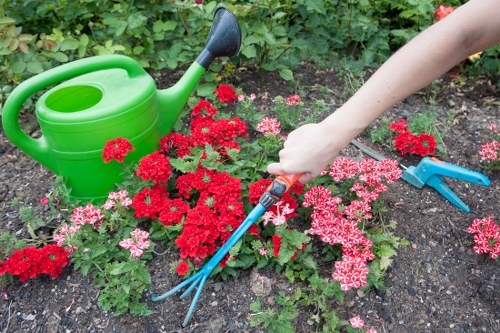 Gardener Blackfriars champions an eco-friendly waste disposal area and a thriving sustainable rubbish gardening area across our sites in and around Blackfriars. We combine practical waste separation with low-carbon logistics to keep green and brown waste out of landfill whenever possible. Our approach balances local borough policies with on-site best practice to create resilient, circular gardening operations.
As a Blackfriars gardening service we set clear metrics to measure progress. Our headline ambition is a recycling percentage target of 75% by 2028 across all materials gathered during garden clearances, pruning, and routine maintenance. That target covers organics, clean wood, metals, plastics, and soil reuse — and is aligned with recent municipal targets in neighbouring boroughs.
 We work closely with the City of London and Southwark approaches to household waste separation — for example, encouraging kerbside-style segregation of: food waste, garden organics, mixed paper and card, glass, and non-recyclable refuse. By mirroring the boroughs' separation standards in our on-site sorting stations we make handover to local transfer points seamless and contamination rates low.
Our core site infrastructure includes clearly signposted recycling bays and a dedicated composting zone where sustainable rubbish gardening becomes a resource. Yard staff follow standard operating procedures to separate branches, turf, soil, and invasive plant material. Wood chipping equipment is used to transform prunings into mulch and on-site pathways, while clean soil is screened and kept for reuse — reducing the need to import new topsoil.
Local transfer stations and civic handover
When material volumes exceed on-site capacity we transfer responsibly to nearby facilities. Our preferred local transfer stations include the Bermondsey Transfer Station, the Walworth civic amenity site and the City of London Waste Transfer facility. These locations accept segregated streams and operate with high diversion rates, so materials we collect are more likely to be recycled or composted rather than incinerated.To make transfers efficient we maintain scheduled routes to these stations and ensure loads are correctly labelled. This reduces contamination, speeds processing at the transfer station, and supports municipal recycling figures. It also allows us to track tonnages by stream so we can report improvements against our recycling percentage target month-on-month.
Partnerships with charities and community reuse
We actively partner with charities to divert usable materials. Through collaborations with organisations such as Groundwork and The Conservation Volunteers (TCV) we donate surplus plants, soil conditioner, and reusable garden furniture. Local food redistribution and community garden projects benefit when we supply compost, tools and plants recovered during clearances. These partnerships help close local loops and strengthen community green spaces.Our circular gardening model also includes working with community allotments and social enterprises that accept structural timber, bricks and other reclaimed materials. By redirecting materials to charity-led projects we reduce waste costs and amplify social value, supporting both climate and community resilience.
Fleet decarbonisation is central to reducing the carbon footprint of garden waste logistics. We operate a series of low-carbon vans — primarily electric and plug-in hybrid light vans — to deliver crews and move sorted loads to transfer stations. Models in service include electric cargo vans and small-transit vehicles chosen for urban manoeuvrability and zero tailpipe emissions on short trips.
Operational best practice extends to scheduling, load consolidation and route optimisation so fewer vehicle miles are required. These measures, combined with our electric vehicles, mean that collection and delivery make a smaller climate impact while still achieving high recycling capture rates. Every tonne we divert from landfill saves carbon and preserves local amenity.
 What residents and clients can expect
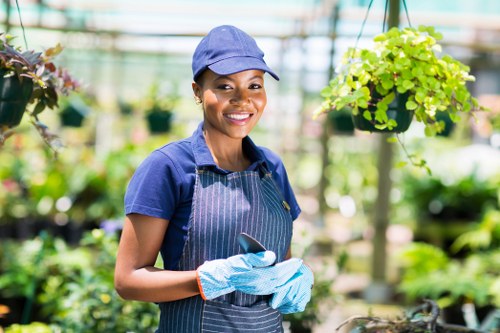 When we work on a site the visible result is a tidy, productive gardening area; the hidden result is careful waste stewardship. We label bins clearly, instruct crews on separation protocols, and leave explanatory signage where useful. Where materials are suitable for reuse we prioritise redistribution through charity partners, and where they are residual we use borough-compliant transfer stations to ensure proper processing.
We continually refine our practices: measuring diversion rates, analysing contamination sources, and investing in staff training. Our recycling percentage target is a living goal — one we aim to beat through better segregation, more local partnerships, and an ever-greener vehicle fleet.
Key activities and commitments:
- 75% recycling rate by 2028 across garden and clearance materials
- Use of local transfer stations to ensure correct processing and maximise reuse
- Partnerships with charities such as Groundwork and TCV to redistribute reusable materials
- Low-carbon vans and route optimisation to reduce emissions from collections
- On-site composting, wood chipping and soil screening to keep resources in the local green economy
In short, Gardener Blackfriars integrates municipal waste separation standards, charity partnerships, and low-emission logistics to build a truly sustainable rubbish gardening area. By coordinating with transfer stations, community organisations and borough recycling programmes we transform waste into usable resources and measurable environmental outcomes.
Our pledge: continue to improve diversion, reduce carbon and support local green projects — making Blackfriars greener, cleaner and more circular.
Join us in cultivating a more sustainable urban landscape — where every branch, bag and bucket has a purpose beyond the bin.